For years, my closet was the most frustrating space in my home. Getting dressed felt like a chore most mornings, and I couldn’t shake the feeling that something was “off” even while standing in front of more clothes than I could reasonably wear. My style’s still evolving, and switching to a cozy minimalist wardrobe made my life feel noticeably lighter, and I honestly didn’t expect a curated closet to do anything for my mood or self-esteem. If you’re feeling overwhelmed by your own closet right now, here’s the good news: there’s a calmer, more intentional way to dress that doesn’t require you to change who you are.
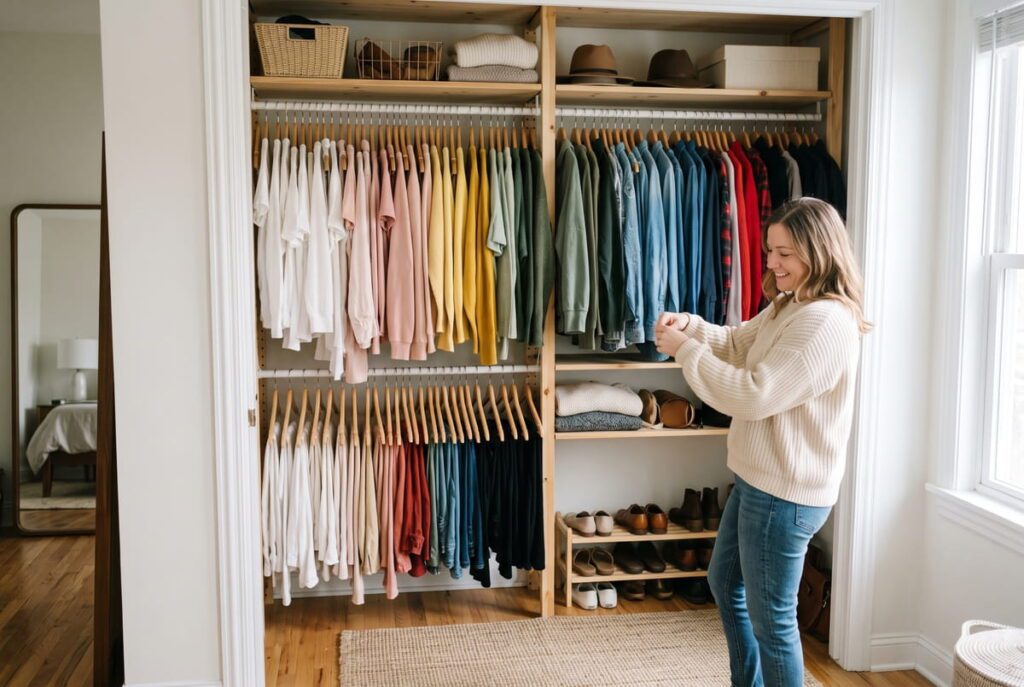
A functional minimalist wardrobe isn’t about what looks good on a hanger or what fits an idealized version of your life. It’s about clothes that fit you, your body now, and the life you actually live. This is my approach to a cozy minimalist wardrobe, one that supports your energy and lets me feel comfortable all day long
Start With Your Real Life (Not a Fantasy One)
Before touching your closet, start with a simple life audit. Ask yourself:
- How do I actually spend my week?
- What do I reach for most often?
- What feels hard about getting dressed?
- What hasn’t been worn in the last year, and why?
- Which colors, brands, and fits do I truly enjoy?
Look for patterns. Your cozy minimalist wardrobe should reflect your real routine, not an aspirational lifestyle. I’ve learned this the hard way. High heels may be Carrie Bradshaw’s version of sneakers, but they have no place in my closet. My feet won’t tolerate them for an hour. Choosing comfort isn’t giving up, it’s just being honest about how you actually want to feel.
Also, size is just information. Whether you’re a size 2 or a size 10, wearing the right size instantly elevates how you look and feel.
The Cozy Minimalist Wardrobe Framework
A cozy minimalist wardrobe isn’t built on a weekend. It’s a cycle. A lifestyle.
- Assess what you own and how it serves your life
- Edit without guilt or fantasy thinking
- Organize for ease and calm
- Maintain with mindful additions and reviews
You’ll move through these stages again and again as your life evolves.
Step 1: Edit With Clear Criteria
Editing is usually the hardest part of this whole process. It’s also the most freeing.
When I first embraced minimalism, I held onto a sweater with holes “just in case.” I kept an old shirt I hated because it might become a pajama. Letting go felt scary, but clarity came once I used firm criteria.
The Mindful Closet Decision Guide
If you LOVE the item…
- Keep & Enjoy: If it fits and you wear it often.
- Repair / Tailor: If you love it but it needs a small fix.
- Sell: If you love it but haven’t reached for it in over a year.
- Gift or Sell: If you love it but it no longer fits your body today.
- Let Go: If it is damaged beyond a reasonable fix.
If you DON’T love the item…
- Upgrade Intentionally: If you use it but don’t love it. Keep it until you find a “forever” replacement.
- Donate: If it fits well but just doesn’t bring you joy.
- Sell or Donate: If it doesn’t fit and you don’t love it.
- Recycle or Dispose: If the item is stained, torn, or worn out.
- Pass it On: If you haven’t worn it in over a year.
Aim to release at least 10% of your wardrobe in this phase.
Important follow-through:
- Repair and launder keepers immediately
- Donate or sell items right away (don’t let them linger)
- Box up “maybes” and remove them from your closet. Revisit later.
Step 2: Create a Cozy Closet Space
Once the excess is gone, something shifts. My closet went from stressful to calm. Getting dressed became easier. My confidence improved, not because I had more options, but because every option felt like me.
Simple ways to create a cozy, functional closet:
- Use matching hangers (plastic, wood, or velvet, your choice)
- Organize by category, then by color
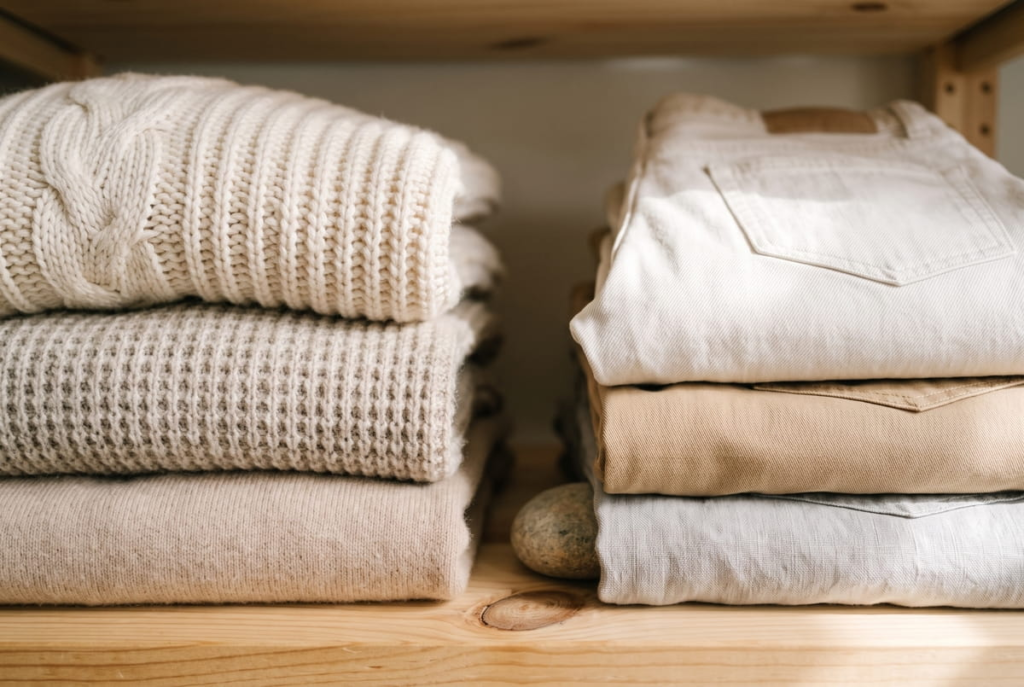
- Avoid overcrowding drawers and shelves
- Keep everything visible and easy to put back
A system that’s too complex won’t last. Simplicity is what makes minimalism sustainable.
Step 3: Identify Your Core Pieces
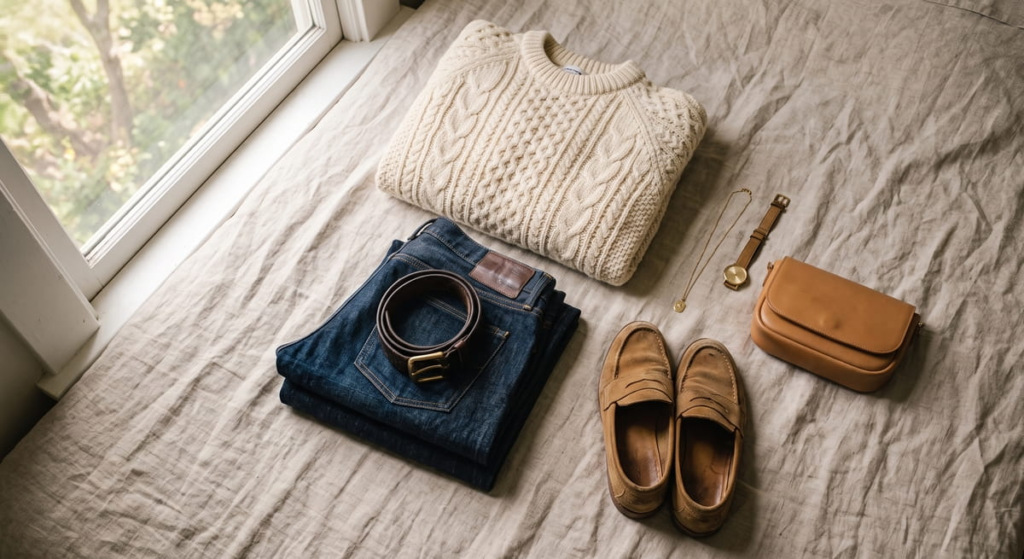
After editing, notice what remains. These are your core pieces, the items you wear again and again because they fit, feel good, and suit your real life.
Don’t fall into the trap of copying someone else’s capsule wardrobe piece for piece. Style is deeply contextual. Where you live, how you move, and what your days look like all matter. In Vancouver, leggings and sneakers make sense. In Paris, tailoring might dominate. Take inspiration, but always adapt it to your own environment.
Success sign: You can name your 10 most-worn pieces and clearly explain why they work for you.
How to Add a Cozy Touch to Your Wardrobe
Coziness is personal. What feels cozy to me might feel heavy or restrictive to you, and that’s the whole point. The way you add cozy touches to your wardrobe should feel personal, tied to your lifestyle and what you actually want to feel when you get dressed.
If you ask me what makes my wardrobe feel cozy, it always comes down to three things: texture, color, and intention.
1. Focus on Textures That Feel Good on Your Skin
The fastest way to create a cozy wardrobe is through how your clothes feel, not how they look on a hanger. Over time, I’ve learned which materials I genuinely love wearing:
- Linen for summer
- Wool for winter
- High-quality cotton year-round
Well-cut garments in these fabrics don’t need to be trendy to feel beautiful. Some of my simplest pieces are my most loved.
One of my favorite outfit formulas is incredibly basic: a good pair of jeans or denim with a soft sweater. Simple, repeatable, and comforting.
2. Use Color to Create Warmth and Confidence
Color plays a huge role in how cozy, and how confident, you feel. Not everyone looks or feels good in the same colors, so start with shades that flatter your skin tone and make you feel grounded.
For me:
- Summer: Terracotta is my absolute favorite. I have terracotta shorts I never leave behind because they go with everything: white tops, black tees, cropped tanks, and they make me feel empowered and put together.
- Winter: I love black, but I don’t enjoy dressing head-to-toe in it. Instead, I add warmth with pops of color (grey, burgundy, deep blue) or through accessories like scarves and knits.
When I do go all black, I soften the look with jewelry. And if you believe in crystals like I do, this can be a beautiful ritual, choosing pieces that reflect how you want to feel that day, whether that’s confidence, grounding, or energetic protection.
3. Cozy Doesn’t Have to Mean 100% Natural Fabrics
Here’s the part that doesn’t get talked about enough: Natural materials are lovely, but they’re not always realistic. Some are expensive, delicate, or require dry cleaning and extra care (cashmere, silk, certain wools). If you don’t have the time, budget, or mental space for that, it’s okay.
You can absolutely create a cozy, elevated wardrobe using high-quality synthetic or blended fabrics. Here are synthetic materials that don’t look cheap and actually work well:
For Summer:
- TENCEL™ / Lyocell / Modal: breathable, soft, drapey, and cooling
- Viscose / Rayon (high-quality): lightweight and comfortable when well-made
- Polyester blends with natural fibers: less wrinkling, more durability
For Winter:
- Recycled polyester knits: warm, easy-care, and widely improved in quality
- Acrylic blends: when blended well, they can mimic wool without itchiness
- Technical fabrics (like Gore-Tex or modern performance blends): great for outerwear and active layers
What matters most is this:
- The fabric doesn’t cling
- It doesn’t look shiny or plasticky
- It holds its shape
- It feels good against your skin
There are now incredible wrinkle-resistant, structured, and soft fabrics on the market that look polished without requiring high maintenance.
If you don’t enjoy laundry or dry cleaning, choose materials that support your life, not an idealized one.
4. Follow Your Rhythm, Not Rules
Coziness isn’t about doing it “right.” It’s about enjoying your clothes. Choose fabrics you don’t dread caring for, colors that lift your mood, and details (textures, jewelry, accessories) that make getting dressed feel grounding rather than stressful. That’s where true coziness lives.
Step 4: Maintain Through Mindful Additions
This is where minimalism truly sticks. I keep a running note of items I think I need. When the urge to shop hits, I pause. I look for pieces that:
- Match my lifestyle
- Fit my existing wardrobe
- Are good quality
- Feel good on my body
- Fit my budget
Yes, it’s a lot to ask, but that’s the point. Intentional buying saves time, money, and mental energy.
A Note on the “Uniform Wardrobe”
I once became obsessed with matching: three of the same shirt, only black, white, and grey. While a uniform can work (think Mark Zuckerberg), repetition should be reserved for true basics like tees or jeans in different washes, not your entire wardrobe.
Step 5: Schedule Seasonal Reviews
Every quarter, ask:
- What wasn’t worn?
- What needs repair?
- Has my life changed?
Minimalism doesn’t require dramatic purges. Just regular, gentle check-ins.
Why a Minimalist Wardrobe Matters (Especially Now)
Most days, your mental energy is already stretched thin before you’ve even picked an outfit. A cluttered closet creates invisible stress: decision fatigue before the day even starts.
A wardrobe that doesn’t work for you costs more than just time:
- Impulse purchases
- Guilt over unused clothes
- The constant feeling of “nothing to wear”
There’s a bigger picture here too. A huge share of the clothing bought today gets worn only a handful of times before it’s tossed, and the Ellen MacArthur Foundation has pointed to that cycle as one of the most wasteful patterns in modern manufacturing. Editing your closet down to what you actually wear isn’t just about your own mental space. It’s a small, real pushback against that cycle.
Minimalism isn’t about rules or numbers. It’s about peace, confidence, and ease in a space you use every single day.
Putting It Into Practice: My Real Wardrobe
I work from home most days and go into the office once a week. My wardrobe reflects that:
- Casual, comfortable basics for daily life
- A few elevated pieces (blazers, boots, blouses) for office days
- Activewear for gym sessions, hikes, and weekends
When I travel, I lean heavily on neutrals and basics that can shift between sightseeing, movement, and rest.
Common Mistakes to Avoid
- Purging too aggressively, then panic-buying
- Copying someone else’s style instead of finding your own
- Holding onto clothes tied to past versions of yourself
- Perfectionism: this is a practice, not a destination
Minimalist Wardrobe Formulas (Structure Without Rigidity)
I love systems, but only when they serve me, not when they become another rule to follow. These minimalist wardrobe formulas are tools, not laws. Use them when you feel overwhelmed, stuck, or tempted to overbuy.
The 3-3-3 Rule
It’s one of my favorite ways to reset.
- 3 tops
- 3 bottoms
- 3 shoes
That’s it. Nine pieces that must work together.
I use this formula when:
- I’m traveling
- I’m transitioning seasons
- My closet feels cluttered but I don’t want to do a full purge
You can create multiple 3-3-3 capsules for different parts of your life: work, casual days, gym, or travel. It instantly brings clarity and shows you what you actually reach for.
The 70-30 Rule
This rule helped me stop impulse shopping.
- 70% basics: neutral, versatile, repeatable pieces you wear weekly
- 30% personality: color, texture, patterns, statement items
When my closet felt boring, it was usually because I had too much of one side. Either all basics (hello black-white-grey era) or too many statement pieces with nothing to ground them.
This balance keeps your wardrobe interesting and functional.
The Uniform Wardrobe (With Intention)
I went through a phase where I became hyper-focused on matching. I bought the same shirt in multiple colors and ended up with a closet that felt efficient, but soulless.
A uniform wardrobe works best when you repeat true basics only:
- White, black, navy tees
- Jeans in different washes
- Simple layers you know fit your body well
The goal isn’t sameness. It’s ease.
Enjoying Having Less
Building a cozy minimalist wardrobe isn’t about owning less just to meet a certain number. It’s about intentionally creating space for confidence, ease, and a deeper sense of self-trust. Your closet should be a tool that supports your daily life, not a source of complication. When your wardrobe finally works for you, you’ll find that everything else in your day feels a little lighter.
If this resonated with you, share it with someone who’s ready to simplify their wardrobe in a gentle, intentional way. And I’d love to know, what’s one piece in your closet that already feels like you? Leave a comment below.