As an Amazon Associate, I earn from qualifying purchases. I only recommend thoughtful, cozy additions to help you create a home you love—at no extra cost to you. (Last updated: 15 November 2026)
Decorating your home or office with low-maintenance indoor plants brings something no candle or throw pillow can quite replicate: a living presence that makes your home feel cozier, warmer, and more connected to nature. We often blame ourselves when a plant doesn’t thrive. Usually, it isn’t a lack of skill—it’s just the wrong plant in the wrong corner. If you’ve killed a plant before and sworn off trying again, this guide is for you. These are house plants for beginners that will thrive in your actual home and won’t require you to be a professional gardener.
What Makes a Plant “Low-Maintenance”?
A truly low-maintenance indoor plant tends to share a few qualities: flexible light tolerance, low watering needs, slow and steady growth, and a high forgiveness rate for beginner mistakes. The secret to a thriving indoor space isn’t a green thumb — it’s understanding your home before you buy anything.
I once lived in a north-facing apartment with almost no direct light. It felt very dark, and I worried nothing would survive. But I found specific low-maintenance indoor plants that not only survived in that space — they genuinely brought life to it.
Best Easy Indoor Plants for Beginners
For spaces that lack natural sun, these are the easy houseplants to choose. They thrive in dimmer environments—from hallways to bedrooms—and stay happy with minimal attention.
Snake Plant
One of the easiest low-maintenance indoor plants you can own. The snake plant is incredibly resilient, works beautifully in home décor, and can grow quite large over time depending on its conditions.
- Light: Low to bright indirect light
- Water: Every 2–3 weeks (allow soil to fully dry)
- Temperature: 15–29°C
- Fertilizer: Light feeding in spring and summer
- Why it’s easy: It tolerates neglect and adapts to most indoor conditions
- Pet Safe: No (toxic for cats and dogs)
ZZ Plant
If you want something truly resilient, this is it. The ZZ plant has thick, waxy green leaves and can go weeks without attention — making it one of the best house plants for beginners who travel or have unpredictable schedules.
- Light: Low to medium indirect light
- Water: Every 2–3 weeks
- Temperature: 18–26°C
- Fertilizer: Rare feeding needed
- Why it’s easy: Stores water in its roots, allowing it to survive dry periods
- Pet Safe: No (toxic for cats and dogs)
Peace Lily
Soft, elegant, and one of the few low-maintenance indoor plants that actually flowers indoors. Peace lilies add a subtle freshness to a room and are wonderfully communicative — they’ll visibly droop when they’re thirsty, which takes all the guesswork out of watering.
- Light: Low to medium indirect light
- Water: About once a week
- Temperature: 18–27°C
- Fertilizer: Monthly during spring and summer
- Flowering: Yes, white blooms indoors
- Why it’s easy: It visibly shows when it needs water
- Pet Safe: No (toxic for cats and dogs)
Rubber Plant
Bold, structured, and surprisingly easy to care for. A Rubber Plant makes a room feel instantly more ‘styled.’ Once it’s settled into the right spot, it basically takes care of itself.
- Light: Bright indirect light
- Water: Every 1–2 weeks
- Temperature: 16–27°C
- Fertilizer: Monthly during the growing season
- Why it’s easy: Low maintenance once placed in the right spot
- Pet Safe: No (toxic for cats and dogs)
Trailing Indoor Plants for Shelves and Hanging Decor
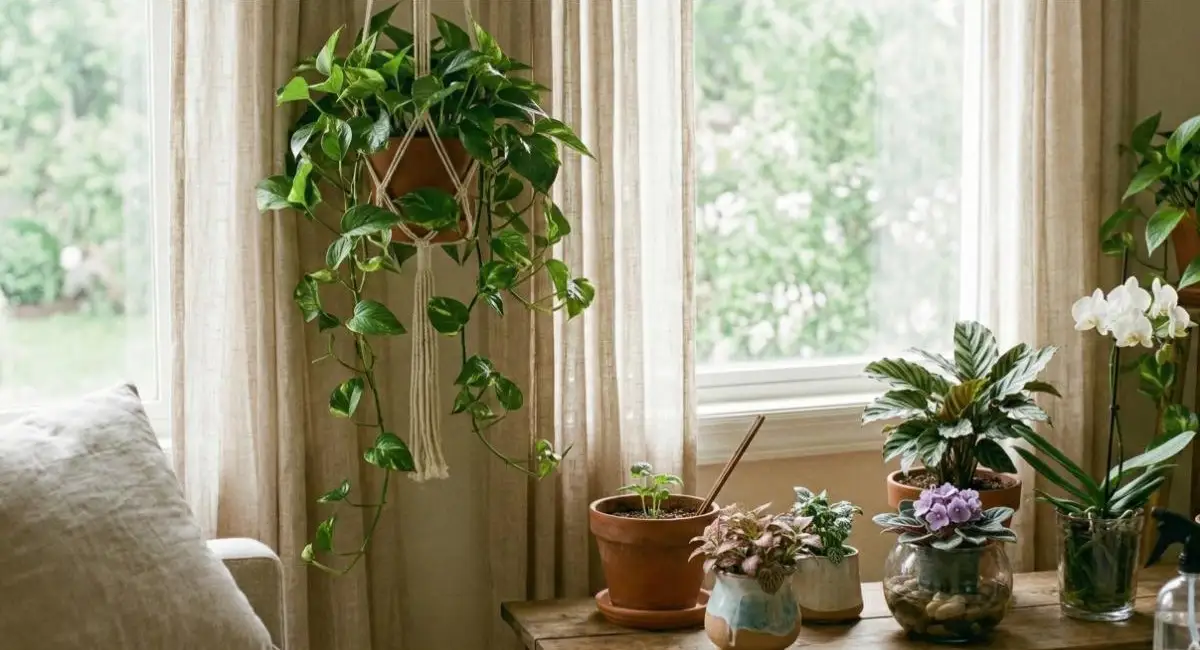
Trailing plants bring a relaxed, flowy vibe to a room that upright plants just can’t match. They look amazing styled on bookshelves, in hanging pots, or draped over tall cabinets where the vines can tumble down naturally. If you have pets, these are easy to keep safe—just hang them from the ceiling or tuck them high up on a shelf out of reach.
Pothos
Fast-growing, forgiving, and endlessly adaptable. Pothos is one of the most recommended indoor plants for beginners for good reason — it genuinely grows with minimal care and handles inconsistent watering without complaint.
- Why it’s easy: Very forgiving and grows even with minimal care
- Light: Low to bright indirect light
- Water: Every 1–2 weeks
- Temperature: 18–29°C
- Fertilizer: Monthly in growing season
- Pet Safe: No. Toxic for cats and dogs
Philodendron
Versatile and adaptable, philodendron does well in a range of indoor environments. It’s especially lovely in cozy corners like reading nooks or bookshelves, where its trailing vines create a soft, layered look.
- Light: Low to bright indirect light
- Water: Every 1–2 weeks (allow the top inch of soil to dry)
- Temperature: 18–27°C
- Fertilizer: Monthly during spring and summer
- Why it’s easy: Very adaptable and tolerant of occasional neglect
- Pet Safe: No (toxic for cats and dogs)
String of Hearts
Delicate, romantic, and a little bit magical. The string of hearts has small heart-shaped leaves that trail beautifully from a shelf or hanging basket. It’s more of a bright-light plant, but its drought tolerance makes it one of the easier trailing options for house plants for beginners.
- Light: Bright indirect light (can tolerate some direct sun)
- Water: Every 2–3 weeks (allow soil to dry between watering)
- Temperature: 18–26°C
- Fertilizer: Light feeding during growing season
- Why it’s easy: Drought-tolerant and low watering needs
- Pet Safe: Generally considered non-toxic to pets
Why Low-maintenance Indoor Plants Often Fail
Before blaming yourself, it helps to understand why plants actually fail. Most low-maintenance varieties aren’t difficult; they simply aren’t in the right environment. Once you bridge that gap, indoor gardening becomes easier. Here are the most common Mistakes with indoor plants.
1. Overwatering
This is the one that gets most people. The majority of low-maintenance indoor plants die from too much water, not too little. Yellow leaves are often a sign of overwatering, while drooping or dry leaves usually signal thirst. Before watering, stick your finger two inches into the soil — if it feels dry, water it. If it still feels damp, wait a few more days. If water runs straight through the pot, try submerging the plant in a bucket of water for 10–15 minutes so it can absorb moisture properly..
2. Wrong light placement
Low light does not mean no light. Every plant needs some level of natural light to survive. Before choosing a plant, observe your space throughout the day — notice which rooms get the most light and at what time. Too much direct sun can also cause leaf burn, so always follow the recommended conditions for your specific plant.
3. No drainage
Decorative pots without drainage holes damage roots over time. A simple solution is to double pot — keep your plant in its original nursery pot and place that inside the decorative one. Add stones at the bottom to prevent the roots from sitting in excess water. It gives you the aesthetic you want without sacrificing the plant’s health.
4. Choosing aesthetics over conditions
It’s tempting to pick a plant purely because it looks beautiful — but a low-maintenance indoor plant still needs to match your actual environment. Before buying, consider your light conditions, humidity levels, temperature, and how often you realistically want to water something.
5. Humidity
Some indoor plants for beginners actually thrive in higher humidity. If your home tends to run dry, consider placing moisture-loving plants in a bathroom with a window where steam from showers naturally increases humidity. A simple plant mister or a small humidifier can also make a real difference — especially for tropical varieties like pothos, philodendron, and rubber plants.
Fertilizer for Indoor Plants
Most low-maintenance indoor plants only need light fertilizing during spring and summer. Use a diluted liquid fertilizer, avoid feeding in winter, and never over-fertilize — it does more harm than good. If you’re using something like Miracle-Gro, always follow the instructions carefully. Natural options like banana peel water or crushed eggshells can also work well, but research what’s appropriate for your specific plant before experimenting.
If you’re interested in using natural fertilizers, you can find some ideas on how to fertilize your plants using organic ingredients.
Building Your Green Sanctuary
House plants for beginners don’t require perfection. They just need a little attention, the right conditions, and some patience. When you choose plants that genuinely suit your space, caring for them stops feeling like a chore and becomes one of the most grounding parts of your day.
And just like tending to your low-maintenance indoor plants, small consistent habits are what create a peaceful home — whether that’s watering your plants on a slow Sunday morning or rolling out your mat for a little yoga for stress relief to close out the week gently.