Decluttering your home sounds simple enough, but when you’re staring at years of accumulated stuff, knowing where to start can feel overwhelming. Some days I feel like I could donate almost everything I own without a second thought. Other days, memories creep in and stop me completely, there’s a conference badge sitting in one of my drawers right now purely because it reminds me of a trip to New York, and I’m not ready to let it go yet. It’s never too late to start though, even if all you tackle today is one messy drawer.
I’ve been going space by space through my own home, and these are the actual tips for decluttering your home that have worked for me, room by room, not the polished version you see in a magazine spread.
Decluttering Your Wardrobe
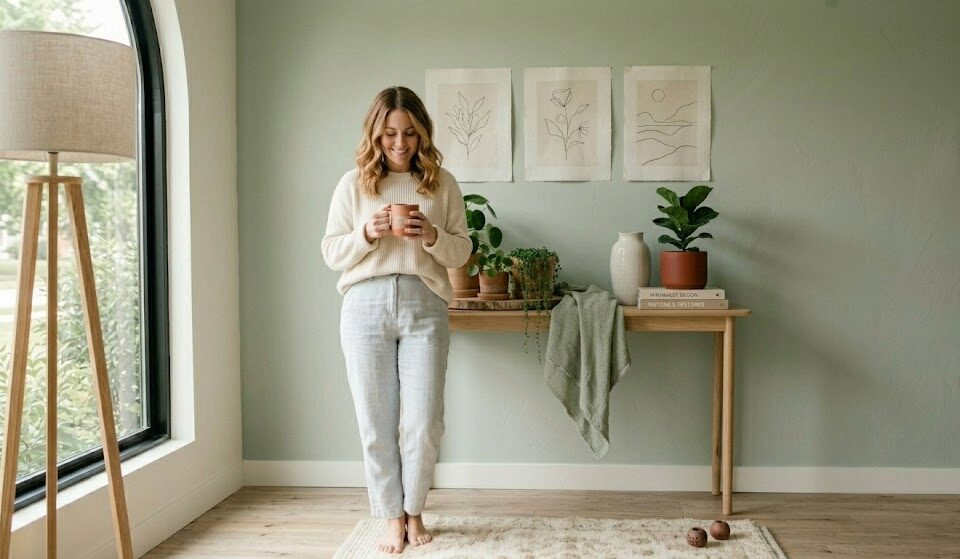
My closet was the first place I tackled, mostly because summer was coming and I needed to actually see what I had. I went through everything and pulled out the pieces that didn’t fit anymore, the ones that were worn through, and a few with actual holes I’d been ignoring. It was a little sad letting go of some of it, there’s always at least one piece tied to a memory you’re not quite ready to release. But once it was done, I ended up with a smaller closet full of things I actually reach for and like wearing, instead of a full one where half the options were just “maybe” pieces I never actually chose.
If your closet needs the same treatment, this is the same logic behind building a cozy minimalist wardrobe: fewer pieces you love beats more pieces you tolerate.
Decluttering Your Kitchen Cabinets
Kitchen items are surprisingly easy to lose track of, every pot, plate, spoon, and pantry item blending into the next until you can’t actually see what’s in there anymore. I used to run out of things and just repurchase them, or so I thought, until I actually went through my cabinets properly and found items that had been sitting there for ages: expired baking soda, grains that had gone stale, even crackers someone brought to a party that were still sealed and long past their date. It was a little sad realizing how much of it I’d completely forgotten was in there.
Going forward, if I end up with a surplus after hosting, or something I know I won’t use in time, I’m giving it away through a local Facebook free group instead of tossing it straight in the garbage. It cuts down on food waste, and it makes me feel a lot less guilty about buying things I never actually got around to using.
Decluttering Paper Clutter: My Fridge Pocket Fix
Paper clutter used to just accumulate on my counter until it became its own small monument. What finally worked was adding magnetic pockets to the fridge. Anything that comes in during the week, a flyer, a receipt, a coupon, goes straight into the pocket instead of landing wherever it happens to get set down. Once a week, I go through the pocket, toss the ads and expired coupons and flyers, and file away anything that actually matters. It’s a small task, but it turned a recurring source of clutter into a five-minute weekly habit instead of an ongoing mess.
Decluttering Your Skincare Collection
I used to buy skincare products fairly often, which meant I ended up with several unopened creams sitting around, more inventory than I could realistically use before they’d expire. So I paused new purchases entirely and committed to using up what I already had first. I’m a few products in now, three creams finished so far, and it’s made a real difference. My bathroom shelf looks less cluttered, and I’m not standing there every morning deciding which of six creams to reach for.
Realistically, I don’t buy into the whole multi-step skincare approach anyway, after the third product, my face starts to feel like it’s carrying too much. My actual routine is simple: a hydrating lotion and tinted sunscreen during the day, and an eye cream and face cream at night to rehydrate. That’s really all I need, so there’s no reason to keep buying more.
The One Area I Haven’t Decluttered Yet
I want to be honest about this one, because most posts like this end with everything perfectly resolved, and mine doesn’t. I still have a drawer where things like that conference badge, stickers, random pins, and single earrings missing their pair all end up, and I don’t know what to do with most of them yet.
What I actually do is check it periodically, usually whenever I’m already in a cleaning mood, and ask which items still mean something to me and which ones have just been taking up space without adding anything back. Some things stay for another round and eventually go later, but at least they’re all contained in that one drawer, not scattered across the rest of the house.
That’s actually the point for now. Decluttering your home is an ongoing project I probably won’t finish this week, or this year, so I’ve had to decide where my energy actually goes. Right now, that means keeping the spaces I see and use every day curated, my wardrobe, my nightstand, the high-traffic areas that shape how the whole house feels day to day. The drawer will get its turn eventually. Until then, its real job isn’t to be solved, it’s just to hold the unsorted things in one place so they don’t end up scattered everywhere else.
A Few Tools for Decluttering Your Home Wherever You Start
However you decide to approach your own space, a couple of quick tests make the process of decluttering your home faster:
- The 10-second scan. Walk through a room and notice what your eyes snag on first. If it interrupts your gaze, it’s worth a second look.
- Does it earn its place? Something earns its spot by being useful, meaningful, or something you actually love looking at. If it’s none of those, it’s just taking up real estate.
- The guest test. If someone you admire walked into the room right now, is there anything you’d feel the need to explain or apologize for? That’s usually your next candidate.
- The one-year test. If you haven’t used, worn, or touched it in the last year, it’s a strong candidate to let go.
- The “would I buy it again” test. If you saw this exact item in a store today at full price, would you actually buy it? If the answer’s no, it’s probably not earning its place either.
Visual clutter also isn’t just an aesthetic annoyance. Competing visual stimuli in your environment actually make it harder to focus, according to Princeton University’s research on attention and visual environments. A calmer-looking room isn’t just nicer to look at, it’s less mental work to simply exist in.
How to Start Decluttering Your Home Today
You don’t need to declutter your whole home this weekend, or even this month. Pick the space that’s bothering you the most right now, your closet, a kitchen cabinet, that one drawer, and start there. The goal was never a perfectly curated home. It’s a home that feels a little lighter to live in than it did last week.
What’s the one space in your home you keep meaning to declutter but haven’t gotten to yet? I’d love to hear about it in the comments.