As a woman who values both professional growth and a calm, intentional lifestyle, I understand how challenging it can feel to choose between saving your money and traveling the world. We want financial security, but we also crave the beauty of meaningful experiences.
What if budgeting for travel didn’t feel restrictive? What if it felt natural, aligned, and even empowering? I’ve learned that traveling mindfully isn’t about spending more or less. When you learn to budget with intention, money stops feeling like a barrier and becomes a tool for your dreams instead.
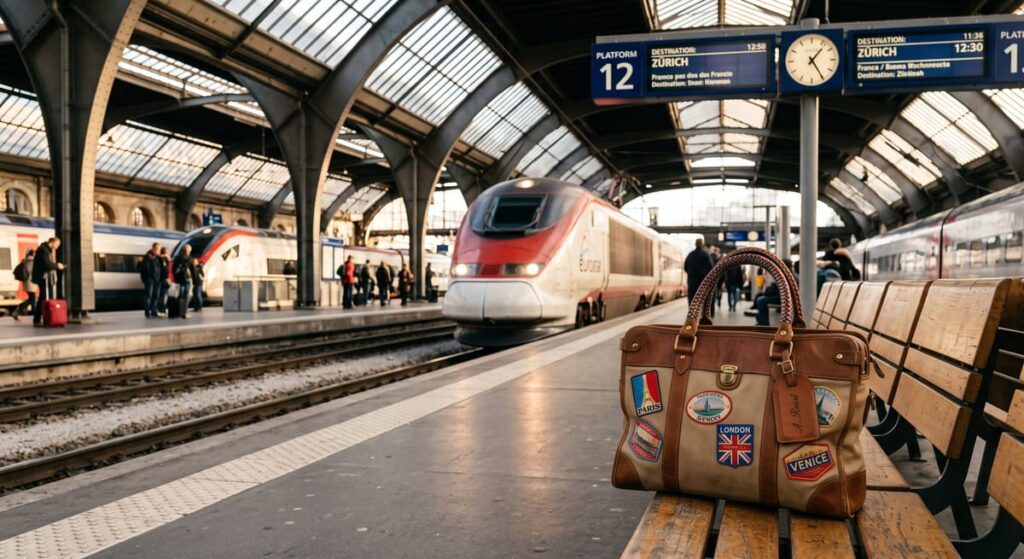
The Gentle Shift from Things to Experiences
Looking back on my own journey, I’ve realized something simple but powerful: the joy of experiences lasts far longer than the excitement of buying something new. This shift, from collecting things to collecting moments, has been incredibly freeing. Instead of accumulating objects that eventually lose their charm, I’ve begun to curate memories. Long walks through unfamiliar streets, conversations over local food, and sunsets that stay with you for years make life feel full in a way things never quite do.
Cornell psychologist Thomas Gilovich has spent decades studying this exact question, and his research consistently finds that people get more lasting happiness from experiences than from material purchases, according to Cornell University’s reporting on his work. Experiences become part of our story. We revisit them in conversations, photographs, and our own memories, years later. Because experiences often involve connection with people, cultures, and environments, they contribute deeply to our emotional well-being and personal growth. Shifting your focus this way makes the practical side of budgeting for travel feel less like a chore and more like an act of self-care.
I remember sitting on the sand in Puerto Vallarta, watching the sunset. There’s an old saying that nothing is more beautiful than a sunset over Puerto Vallarta, and honestly, it held up. It was early in the year, but still warm enough to catch a little sun while I sat there listening to the ocean. No souvenir, no receipt, just sand and sound and light, and it’s stayed with me longer than almost anything I’ve ever bought.
Italy gave me something different entirely. A woman I met along the way taught me the phrase piano piano, slowly, slowly, and I’ve never forgotten it. Taking the train between cities, riding public transit instead of always grabbing a cab, gave me the time to actually see the places in between. Florence in particular has stuck with me: the piazzas, the views, more art and culture packed into a walkable city than felt possible.
Aligning Your Spending With Your Values: Intentional Spending for Travel
Mindful travel is about understanding what truly adds value to your experience. For me, travel is about immersing myself in local culture and embracing slow living. It might be discovering a small neighborhood café, walking through historical streets, or spending unhurried time in nature.
For someone else, the priorities might be art museums or outdoor adventures. The key is identifying what genuinely brings you joy. Once your priorities are clear, you can allocate your travel budget with intention. If exploring local cuisine is important to you, allow yourself to invest in memorable meals. When I’m in Italy, that means pizza, pasta, gelato, and good coffee, not a burger from back home. The whole point of going somewhere is tasting what the locals actually eat, not recreating your own kitchen in a different time zone. Mindful budgeting isn’t about restriction. It’s about clarity. Without the clutter of unnecessary purchases, my life feels calmer, lighter, and infinitely richer.
This same clarity matters in your everyday life too. Learning mindful spending habits helps you save for these big adventures without feeling deprived along the way.
Assessing Your Financial Landscape: A Guide to Mindful Budgeting
Creating a travel budget that feels sustainable begins with gently observing your current financial habits. Try tracking every purchase for one month. This simple awareness is the foundation of budgeting for travel; it shows you exactly how much room you have to grow your adventure fund.
This isn’t about judgment. It’s about making space in your budget for experiences that enrich your life. I’ve used YNAB (You Need A Budget) for over six years now. The price gave me pause at first, but I got used to it quickly, and I genuinely enjoy the process of seeing exactly where my money goes and how close I am to my goals. It’s a zero-based system where every dollar is assigned a purpose, which makes it easy to keep a dedicated travel category and watch it grow month to month.
If a full zero-based system feels like too much at first, a simpler starting point works too: aim to set aside at least 5% of your take-home pay toward travel each month. It doesn’t have to be a lot. Right now, mine sits somewhere around $300 a month, sometimes more if a specific trip is coming up, sometimes less if other priorities take precedence.
That category has to stretch to cover hotels, food, public transit, flights, entrance tickets, and whatever activities I actually want to do, so I try to be realistic about what it needs to hold. A no-spend weekend every so often is also a surprisingly easy way to nudge that number forward without feeling deprived in the meantime.
One thing worth planning for if you’re not traveling in your home currency: it adds up faster than you’d expect. I live in Canada, and every trip somewhere with a stronger currency has taught me the same lesson. Budget a bit more than the math on paper suggests, because the exchange rate has a way of making everything cost more than it looks like it should.
One habit that’s made the biggest difference for me is automating it. A set amount moves into my travel fund the same day my paycheck lands, before I ever get the chance to spend it elsewhere. It’s a small thing, but it means the fund grows steadily in the background instead of depending on willpower I may or may not have on any given week.
Transforming Dreams Into Plans
Turning a travel dream into reality follows a simple, reassuring rhythm. Start by collecting images and ideas that reflect the feeling you want your travels to evoke. Right now, that’s London for me. I’ve never actually been, but something about a city that mixes centuries of history with music, theatre, and constant energy has pulled at me for years, mostly through movies, if I’m honest. Paris is already one of my favorites, for the architecture, the culture, the whole feel of the place, and I suspect London will earn a similar spot.
I’m not chasing a checklist here. I don’t need to hit every country or claim every continent to feel like I’ve traveled well. I’d rather return to a handful of places I genuinely love than collect stamps for the sake of it, and that’s exactly what a travel budget should actually be built around: what pulls at you, not what looks impressive.
To bring your vision to life:
- Research destinations that genuinely excite you, not just wherever’s trending in your feed. Choose one or two that keep pulling your attention back.
- Create a realistic savings plan for budgeting for travel and start contributing to it consistently, even in small amounts. Slow progress still moves you forward.
- Book early when you can, and keep an eye on prices even if you collect points with one airline. Loyalty is great, but a genuinely better fare elsewhere is worth taking.
- Travel off-peak when your schedule allows. Low season often means lower prices and a lot less rushing, without sacrificing the experience itself.
The Art of Traveling Light and Slow
Rather than filling your itinerary with endless activities, choose a few meaningful experiences. A slow morning in a beautiful place can be far more fulfilling than rushing through a long checklist of attractions. Sometimes, doing less allows you to experience more.
This minimalist approach applies to your luggage, too. Packing light is one of my favorite travel habits, especially in Europe, where you’re walking and carrying your own bags far more than you’d expect at home. I re-wear my blouses and pants throughout a trip and just change out underwear and socks daily. If something wears out or runs low while I’m there, I deal with it there, wash it, buy a replacement, whatever’s easiest, rather than packing an extra bag’s worth of backups for problems that might never happen.
Finally, remember that not every moment needs to be luxurious. With a little research, you can skip overpriced tourist traps in favor of authentic, affordable local spots. When it comes to hotels, I usually book somewhere in the middle, not the cheapest option, but not a splurge either, since I typically travel with my partner and we’re happy sharing a smaller, simpler room. The one non-negotiable is cleanliness.
Beyond that, I lean on reviews and keep an open mind. Prices shift a lot depending on whether you’re in a major city or somewhere smaller. This balance of comfort and cost is a key part of sustainable budgeting for travel, allowing for splurges that truly matter instead of ones that just add up.
Returning Home: Integrating Travel Lessons
Travel has a beautiful way of reshaping our relationship with money, and one of the biggest lessons has nothing to do with flying anywhere at all. If your budget or your circumstances don’t stretch to another country right now, that’s genuinely fine. Explore nearby instead: a train ride, a short drive, a weekend somewhere an hour or two from home. It can be just as rewarding, and it means you’re not waiting for permission to feel like you’ve actually traveled.
When you do go further, the same instinct applies. Skip the queue for the expensive attraction that rushes you through in twenty minutes and spend that time in a park, a local café, or just wandering a neighborhood instead. Some of the most meaningful parts of a trip cost nothing at all.
When we recognize that the most meaningful moments are rarely the most expensive, we approach money with more clarity and gratitude. Travel becomes more than an escape. It becomes a reminder that a rich life is built through intentional experiences. By mastering budgeting for travel, you aren’t just saving money. You’re intentionally designing a life full of light and meaning.
Right now, I’m saving toward London. I’ve never been, but I have a feeling it’s going to be worth every dollar. What’s the destination you’re currently saving for? I’d love to hear about it in the comments.